California’s RN grads in licensing limbo
By Eryn Brown, Kaiser Health News
Fremont resident Angel Li submitted a license application to California’s nursing board on March 15, about two months before she graduated with a bachelor’s degree in nursing from Washington State University in Spokane.
After hearing nothing for 12 weeks — the length of time she had been told she should expect to wait — Li started calling the agency. “I kept waiting and waiting and calling back,” she said. “Sometimes they just hung up due to the high call volume.”
State officials claim that hiring new nurses is a crucial workforce concern for California, yet at least 2,000 recent RN graduates like Li remain in licensing limbo, their applications taking as long as 24 weeks for the Board of Registered Nursing to process.
Experienced nurses from other states who apply for California licenses also wait months for the go-ahead to work.
The delay is a major inconvenience for the nurses who want jobs and a hassle for the hospitals that want to hire them.
And critics say at least some of the problem stems from the flawed $96 million implementation of a computer system called BreEZe which, as its name suggests, was intended to streamline professional licensing.
Patricia McFarland, CEO of the Association of California Nurse Leaders, an advocacy group, described the computer system as poorly conceived and inefficiently deployed. She cited it as a significant contributing factor in the delays.
Moreover, she said, the licensing board doesn’t have a big enough staff to handle the volume of license applications it receives.
“We can’t license our graduates,” McFarland lamented. “Nurses want to retire; they want to train the next generation. We have hospitals investing in residency programs and they can’t start the new nurses they want to hire. At the end of the day, who’s suffering? Our nurse graduates and our patients.”
Veronica Harms, a spokeswoman for the nursing board and for the Department of Consumer Affairs that oversees it, said the department had resolved early glitches with the new computer system. But she acknowledged that the system is still labor-intensive and time consuming, and she agreed more staff is needed to speed the licensing process.
Harms said that the board’s new executive officer, Joseph Morris, who started July 10, “has acknowledged the backlog of applications and is determined to work with (the department) in finding long-term solutions.”
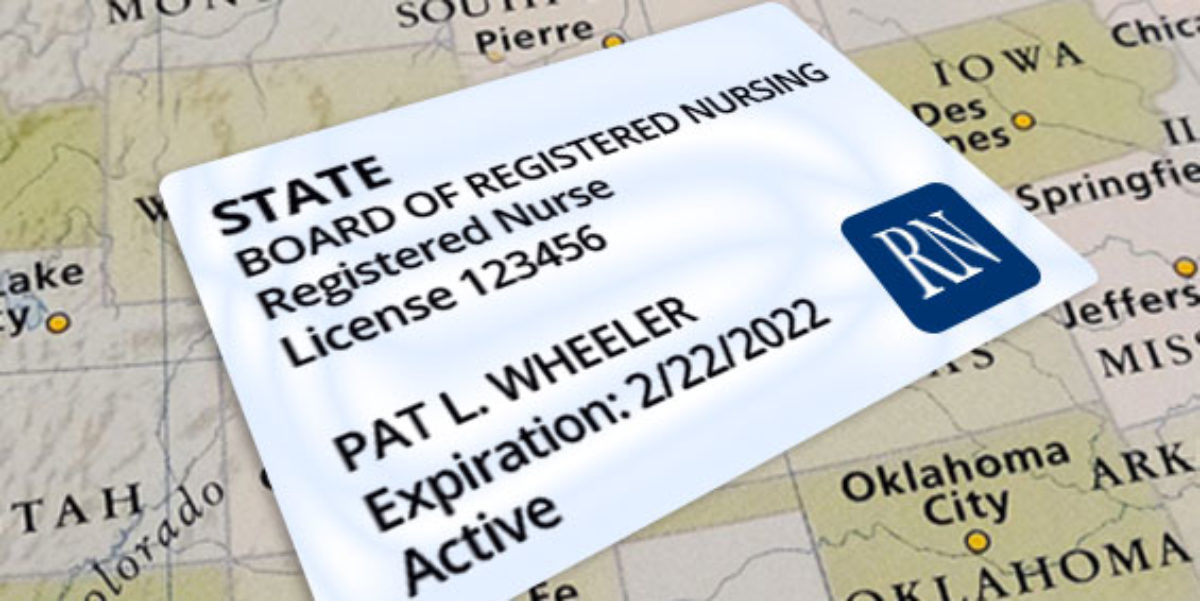
The nursing board is responsible for licensing the state’s more than 417,000 RNs. It conducts background checks, verifies educational bona fides, and authorizes nurse graduates to take the National Council Licensing Examination, or NCLEX, which candidates must pass to get their nursing license.
In fiscal year 2015-2016, the board issued 23,743 licenses, more than half to new nurses.
This year’s delays are not the first at the board, which suffered a slowdown in 2014 after it and nine other state licensing agencies adopted the “off-the-shelf” BreEZe system. Once launched, the system malfunctioned, upending workflow and creating more tasks for staff.
A February 2015 report on the system by the California State Auditor concluded that the consumer affairs department “failed to adequately plan, staff, and manage the project for developing BreEZe.”
The audit recommended that the nursing board analyze its application process to determine its need for additional resources.
But McFarland, of the nurse leaders’ association, said the state audit was a “game of dodge ball” in which the consumer affairs department and state IT leaders refused to accept responsibility for a real fix.
The audit showed that most of the 10 state boards that implemented BreEze in 2014 were “generally dissatisfied” with it.
All 10 were unhappy with the system’s reporting capability, and eight of them said the system actually made their operations less efficient.
Today, BreEZe is used by 18 state boards, bureaus and committees, including the Medical Board of California, the Dental Board and the Board of Behavioral Sciences.
The nursing board reports on its website which applications it is currently reviewing — but only by dates received, not by name. Applicants cannot click to find out where their individual applications stand in the process or how much longer they should expect to wait. And the website warns that “contacting the Board for application status while within these timeframes may cause processing delays.”
As of Aug. 8, the board was processing applications filed between March 16 and March 31, according to the website. Nursing graduates said it seems to have been working on March applications for some time.
Li, the Fremont nursing graduate, had a promising interview in May for a pediatrics position at a Southern California hospital. But the manager, who wanted to hire her, said she couldn’t move ahead until Li had her license.
“I interviewed with some other ones, too, but they made it pretty clear they wanted someone with a license,” Li said. “I’ve been actively putting in several applications a week and I haven’t heard back from a lot of them.”
Li filed a complaint with the Consumer Affairs Department but said she hadn’t heard back yet. She may soon start looking for non-RN work to tide her over. “At this point I have to get a part time job and start working to support myself,” she said. “I don’t think I can wait any longer.”
Other nursing grads are also confused and frustrated as their job searches get mired in the state’s licensing logjam.
Lara Golden, who recently earned a Master of Nursing degree from the University of Virginia, applied for her California license on April 13.
She had postal receipts, but when she called the board in June they couldn’t find her paperwork. So she flew from Virginia to California to submit a second set of fingerprints in person.
Seven weeks and many phone calls later, Golden is still uncertain when her application will be reviewed.
“I have people calling me crying,” said Kathy Harren, regional chief nursing officer at Providence Health and Services, Southern California.
“We have positions for them, but we can’t let them in without licenses in hand.”
Kaiser Health News is an editorially independent program of the Menlo Park-based Kaiser Family Foundation.
For the complete article visit, http://www.santacruzsentinel.com/business/20160821/californias-rn-grads-in-licensing-limbo